Dubai Service Charges: How to Check and Budget
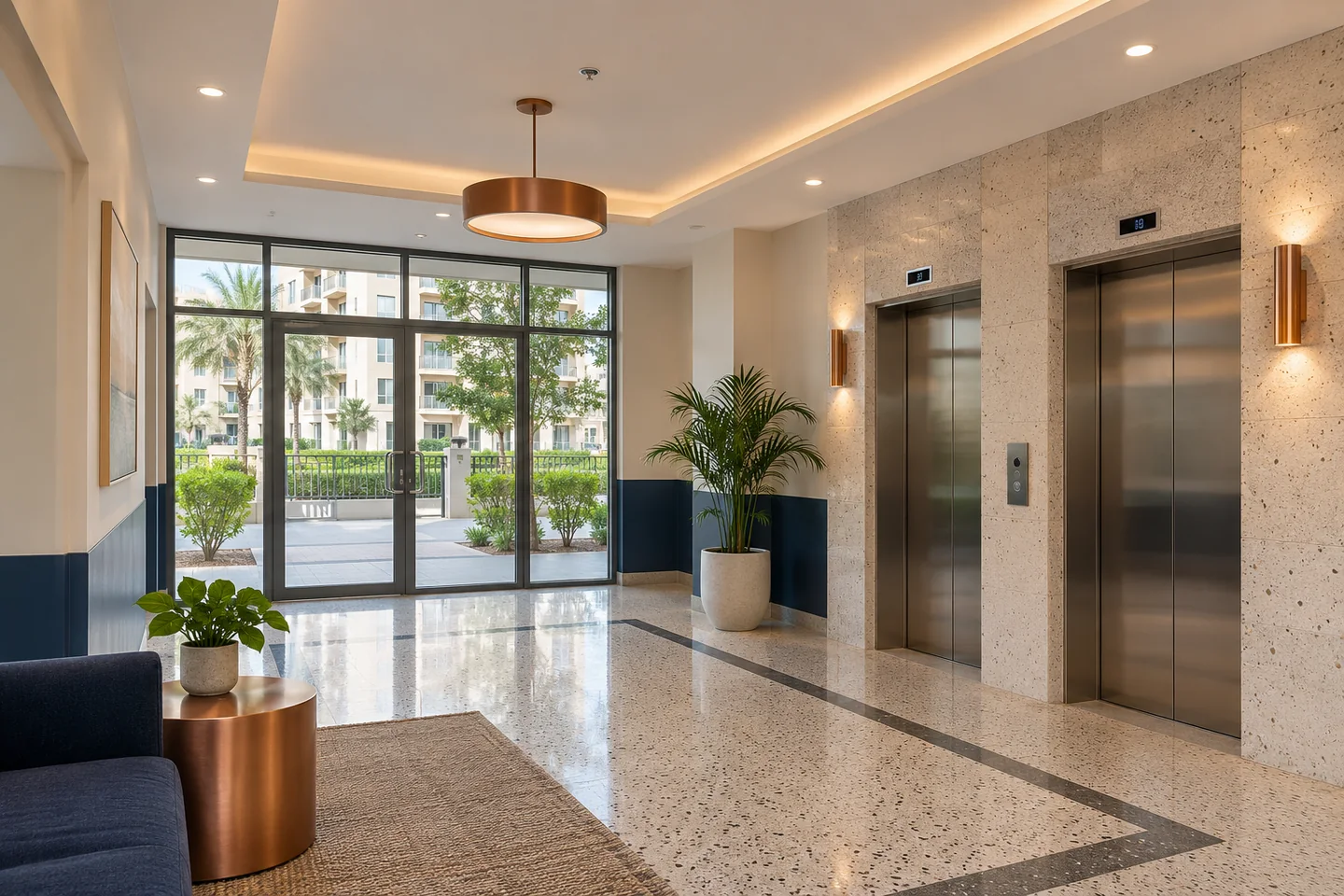
Two apartments can have the same asking price, floor area and promised rent while leaving their owners with very different bills. The difference often starts with the building. An apartment in a tower with several lifts, extensive landscaping and staffed facilities carries a different share of common costs from an apartment in a modest building. Even units marketed under the same development name can belong to different phases or billing schedules. To budget accurately, identify the exact unit, check the approved budget and reconcile it against the actual owner’s statement.
This guide explains how to check Dubai service charges before buying, what to request from the seller and management company, and how to convert an annual estimate into a calendar of cash payments. All charges and property details in the worked examples are hypothetical. The objective is a budget you can update when a new invoice arrives.
Quick answer
Dubai service charges are owners’ contributions toward managing, operating, maintaining and repairing the common parts of jointly owned property. Look up the building or unit in the Dubai Land Department Service Charge Index for the relevant usage and financial year. If the approved amount is expressed per square foot, use the area or allocation confirmed for the unit. Verify the calculation against an owner’s statement and current invoices. Separately track historic balances, closing adjustments, cooling charges if billed elsewhere, and private maintenance inside the apartment.
Key takeaways
- Match the project, building, usage, financial year and unit before you use a published figure.
- The approved budget shows the applicable charge for a period. The invoice and statement show what was billed, paid and left outstanding for the individual account.
- Ask for at least two comparable budget periods when available. A partial year, an adjustment or a separate community charge can distort the comparison.
- Carry your building charge, in-unit maintenance reserve and separately billed services on different rows in your budget.
- Build the purchase-year calendar as well as the steady annual total. Transfer timing and invoice dates affect how much cash the buyer needs immediately.
What Dubai service charges pay for
Jointly owned property can include an apartment building, a mixed-use development or another project with shared parts and defined ownership allocations. In an apartment tower, the lift, shared lobby and common building systems serve many owners. Individual ownership comes with a contribution to the relevant common costs. Dubai’s Law No. 6 of 2019 on jointly owned real property, particularly Articles 25–27 and 30–31, sets out responsibilities for service and usage charges, approval and related accounts.
An operating budget may include common-area electricity, cleaning, security, management, landscaping, insurance and service contracts. The scope depends on the development and the approved budget. One building may employ concierge staff and run a temperature-controlled pool year-round. Another may have fewer shared systems but rely on an ageing lift. The useful comparison is between the obligations, the physical condition and the services received. An unusually modest charge deserves the same scrutiny as an expensive one.
General operating costs and reserve funding
Operating expenditure keeps the property functioning through the budget period. Reserve funding helps meet larger or longer-cycle common costs that do not arrive evenly each year. Dubai’s jointly owned property law provides for a cash reserve in the management system for specified emergencies or replacement of equipment and devices in common parts. The existence of a fund says little about how much cash is available relative to the work planned. When information is available, compare the fund’s purpose, the condition of major equipment and the management company’s schedule for large expenses.
Ask whether the statement or approved budget already includes the reserve contribution. If it does, adding a separate copy of that same contribution will inflate the projected charge. Your private cash reserve for repairs inside the unit is a different line. For example, a reserve for replacement of a common lift serves the building, while money you set aside for a washing machine serves your apartment. The table in the budgeting section shows how to keep those amounts separate.
Building charge, community charge and utility bill
A building can sit inside a master community that maintains roads, paths or shared facilities. Identify which charges appear on the unit’s invoice and whether a further amount applies to the property. DLD’s approval service for service and usage charges lists supporting budget and contract materials that may include major-complex fees, utilities and central air conditioning. That is a reason to inspect the project’s documents individually. It does not establish a universal billing arrangement for these items.
Cooling deserves a separate question. Find out whether common-area cooling sits in the shared budget and whether the apartment has an individual cooling account, consumption charge, fixed charge or a combination. Establish responsibility under the lease if it is rented. A listing description such as “chiller free” is too broad to complete an ownership budget. Ask for a representative bill or written explanation showing the account holder and what continues to be payable while the property is empty.
How to find the approved amount for a Dubai unit
Start by asking the seller to show the full property identifiers through an appropriate private channel. For your working file you typically need the tower or building name, project or master community, unit number, usage and relevant area. For a resale use the documents the owner can lawfully share and check them against the Dubai property due diligence checklist. Keep personal information and unrelated account details out of any comparison sheet you circulate.
Open the DLD Service Charge Index. The service has routes for title deed details, an index search and a map. DLD also provides instructions for finding the index in Dubai REST. For a project-based lookup, select the relevant project, usage and year. Save the result with the lookup date and record what the units on screen mean. A rate per square foot and an amount for a complete unit are different inputs.
Resolve similar project names before pricing
Many listings abbreviate building names. A marketing name might apply to several towers, and a seller’s prior-year invoice may use a formal name that you do not recognize. If several results appear, compare the title reference, building identifier and usage in the current owner’s records. Verify whether the rate applies to residential rather than retail or office use. A convenient search result for another tower is a useful clue about what to ask for, but it cannot support the purchase budget.
Use the billing area or allocation confirmed for the charge. The area in a listing may be rounded, may use a different definition or may simply contain an error. Parking, storage and other allocated rights can also complicate a quick comparison. Ask which separately listed items are included in the displayed amount. If the index result is annual and the bill shows one invoice period, convert each to the same basis and note any assumptions. If you still cannot reconcile the figures, request a written explanation instead of forcing the amounts to match.
When the relevant year is missing
A prior-year approved budget can provide a starting point while a more recent period is unresolved. Label its year prominently. Ask management for the most recent approved figure, what invoice period it covers and whether a revision or supplemental request is pending. A seller’s informal statement that the amount “has never changed” is weak evidence. A dated budget or statement lets you model a known base and keep unresolved changes visible.
For a new building or off-plan unit, request a written estimate and ask when the first approved budget and charge dates are expected. The estimate may be useful while comparing offers, provided the words “estimate pending approval” remain in your worksheet. Examine the facilities being delivered, what management arrangements are known and whether you will carry charges before the first tenant begins paying. The off-plan payment plan guide explains how to place these costs alongside the handover balance and opening liquidity needs.
Reconcile the budget, invoice and statement
Use three documents for three questions. The approved budget or index answers how the charge was set for the property type and year. The invoice identifies what was billed to the owner for a specific period and when payment is due. The account statement logs the sequence of charges, adjustments, payments and outstanding amounts. DLD’s Mollak process guide describes an approval notice to owners and quarterly invoices based on the approved budget. Obtain the actual dates and amounts for the unit before budgeting.
When a seller sends only a screenshot of a paid bill, ask for the period covered. A single paid invoice cannot show whether another period has an unpaid balance, whether the payment included a credit or whether the invoice represented an entire year. If it was paid recently, ask for the refreshed account statement so you can distinguish a payment initiated from a payment posted. The desired outcome is a documented starting balance and a clear agreement about obligations at the transfer date.
| Evidence | What it answers | What to do with it |
|---|---|---|
| DLD index or approved budget | Which charge applies for this project, usage and year | Capture the identifiers, rate or approved total and lookup date |
| Unit invoice | What the unit was billed for one period | Record due date, item breakdown, account reference and covered dates |
| Current statement | Which debits, credits and payments are posted | Separate current-year charges from historical balances |
| Management explanation | Why approved and billed amounts differ | Record the explanation, effective date and who provided it |
| Signed closing instructions or settlement statement | How any adjustment is handled in this transaction | Track the agreed amount separately from the ongoing cost budget |
Identify the type of mismatch
When the amounts disagree, recalculate from the smallest pieces. Confirm that the relevant usage and year match. Check whether the invoice covers ninety days, a calendar quarter or another period. Determine whether it includes carryover, a correction or an additional line. If the amount on the ledger is a final balance after a payment, you may be comparing an account balance with an original charge. In that case the discrepancy is one of interpretation and the annual model should use billed amounts for the relevant year.
Consider a hypothetical annual charge of AED 12,600. A quarterly invoice could display a new charge of AED 3,150, a previous balance of AED 1,200 and a credit of AED 450. The displayed balance would be AED 3,900 if no further payments were reflected. Multiplying AED 3,900 by four would overstate the recurring charge by AED 3,000. Copy the current-quarter charge into the operating schedule and track the remaining AED 750 as a separate carried net balance to reconcile at transfer.
Deal with seller balances before committing
Check the settlement requirements with the registration trustee, relevant management entity and adviser handling the transaction. The DLD property sale registration service lists documentation and channels for the formal sale process, including the developer’s electronic no-objection certificate in the freehold areas described by DLD. Confirm the steps for your property and preserve a dated written record of who pays any outstanding or apportioned amounts, when clearance is expected and how the transfer proceeds if the amount changes.
A buyer and seller may discuss credits, prepayments or apportionment in their sale agreement. Keep any such amount as a one-time purchase or closing adjustment in your model. For example, if the seller receives reimbursement for a period already paid, that can increase the buyer’s immediate cash requirement even while the annual charge remains unchanged. Confirm the exact mechanism and documents for the transaction with the professionals involved. A verbal description is insufficient when the transfer date moves across a billing period.
Build an annual and quarterly ownership budget
To estimate a per-area charge, multiply the quoted rate by the unit area verified for that charge. For a hypothetical 900-square-foot residential unit billed at AED 14 per square foot for a complete year, that produces AED 12,600. If the annual approved rate already includes general and reserve funding, the figure represents both within the modeled scope. If your verified statement shows an additional separately billed AED 1,800 charge, add it on another row. Use the actual currency and period for each line.
Now place the invoices into months. At AED 12,600 a year, four equal hypothetical instalments would be AED 3,150 each. Real invoice dates and amounts can vary. A buyer budgeting AED 1,050 every month has the same annual allocation, but still needs AED 3,150 available at the first due date. Reserve the money in advance of a due date, particularly if rent is received later or paid in instalments. The same approach works for owners who live in the unit and pay every building expense from their salary or savings.
| Annual ownership cost | Example calculation | Annual AED | Cash timing to verify |
|---|---|---|---|
| Approved building charge | 900 sq ft × AED 14 | 12,600 | Four illustrative AED 3,150 invoices |
| Separately confirmed community charge | Annual statement amount | 1,800 | One illustrative payment in April |
| Individual fixed cooling cost | AED 100 × 12 | 1,200 | Monthly, if payable by owner |
| Private in-unit repair reserve | AED 200 × 12 | 2,400 | Set aside monthly |
| Total allocated | Sum of the four modeled lines | 18,000 | AED 1,500 average per month |
This example stops at the ownership-cost lines relevant to the building and unit. Mortgage payments, insurance not included in any other line, leasing, vacancy and other investment costs can be added in their proper categories if applicable. When comparing income potential, bring the appropriate recurring costs into a net rental yield calculation. Keep purchase transaction costs and financing cash flows distinct so you can see whether the issue is an expensive building, an expensive transaction or an unsuitable funding schedule.
Stress-test a change in approved charges
Create a known-charge case and at least one higher-cost case using assumptions you can defend. If the hypothetical building charge rises by 12%, AED 12,600 becomes AED 14,112. The increase is AED 1,512 and the other example costs remain at AED 5,400, bringing the modeled total to AED 19,512. Compare that change against your cash cushion. The 12% is a scenario input. It does not represent a typical, allowed or predicted increase.
Next test a year when your private repair reserve does not cover the work that arises. If your unit needs an AED 5,000 appliance or equipment replacement, your AED 2,400 private reserve for that year leaves AED 2,600 beyond the modeled allocation. You can budget this excess as a one-off and still retain the recurring reserve line. Test overlapping events as well. If the replacement occurs in the same month as a large service-charge invoice, the immediate funding need can matter more than the increase in annual cost.
Compare two buildings on equivalent terms
Suppose Building A’s comparable 850-square-foot unit is quoted at AED 11 per square foot, giving AED 9,350 before comparable extras. Building B’s comparable 850-square-foot unit is quoted at AED 15, giving AED 12,750. At first glance the gap is AED 3,400. If separately confirmed owner-billed charges add AED 2,600 to A and AED 400 to B, the adjusted totals are AED 11,950 and AED 13,150. The recurring gap narrows to AED 1,200. Ask whether the facilities and planned works justify the residual difference.
Compare the approved budgets for the same year and the cost categories you have included. If A’s value comes from the prior year and B’s is current, present the figures with those dates and model a sensitivity for A. Compare physical evidence as well. A building with leaking common equipment, deferred maintenance or persistent service gaps may need more investigation. A higher rate can pay for services with value to an owner, but you still need to decide whether you use those services or can recover the cost through the evidence-supported rent.
What a buyer should ask management and the seller
Request the current approved budget extract or statement, recent invoices, a dated balance and any available record of budget changes. Ask about the billing basis and the approved projects or community entities included. If there are unresolved questions, separate facts you have confirmed from estimates that management or the agent is still checking. Keep a dated copy of the answer. An investor might review several units over a weekend and otherwise forget which charge belonged to which tower.
Use these questions in a single written request. Identify the unit and specify the financial year in your subject line. Ask to receive a response on the relevant items even if others require separate approval or cannot be supplied. Send through the seller or authorised representative if management requires it.
- What is the currently approved recurring charge for this specific unit, and what period and allocation does it use?
- Which services and reserves are already included, and which building, community or cooling amounts are billed separately?
- What does the latest unit statement show as invoiced, due, prepaid, credited or paid?
- Have approved rates, management arrangements or services changed in recent years, and are any material works planned?
- Who can confirm the settlement treatment at transfer, and what document will record the agreed amount?
Tailor the review to the property. In a building with large mechanical systems, the anticipated scope of inspection, servicing and refurbishment can matter. In a villa community, the distinction between shared grounds and private maintenance may have a greater effect. For a mixed-use tower, ask which usage class and facilities apply to your unit. These differences give a reviewer more context than a simple per-square-foot ranking.
Build a file you can update
Store the approval result, the owner statement and the invoices together. In the worksheet use a single row per cost line and columns for source, period, amount, due date, owner responsibility and confidence. A useful confidence label is “approved,” “billed,” “estimate,” or “awaiting confirmation.” Change the label when you receive evidence. A dated audit trail helps you explain a negotiation request or understand why expenses differ after moving in.
When you compare a direct purchase with a pooled property investment, consider how building charges reach the investor. In a pooled structure the asset or vehicle may pay the expense before any distribution. Ask whether an advertised figure is gross income, operating cash after property expenses, or cash distributed after platform and vehicle fees. That distinction helps you avoid charging a cost twice when entering comparable numbers.
Common budgeting errors and how to spot them
A frequent error is to copy an area-wide rate into every property’s spreadsheet. Use area-level examples to understand what to ask for. Establish the specific building, unit and year before ranking shortlisted properties. Another common error is to spread a quarterly invoice evenly over twelve months and assume the money will be available whenever due. Build a due-date view alongside the annual comparison. Mark the first date when your cumulative allocations fall behind invoices.
Another mistake is overlooking costs that keep running during vacancy. A vacant property can still incur shared building costs and some fixed account charges. Tenancy language may allocate some individually billed charges between landlord and tenant. Model those obligations from the documents and assess your exposure before and after the expected tenancy. A “fully let” model is useful for comparing stated assumptions, but a vacant-month scenario reveals what you must fund if letting starts later.
Finally, do not assume that a smaller approved charge makes the purchase stronger. Check the amount against building condition, amenities, occupancy, management and your planned use. Ask what evidence would justify a higher price for one unit compared with another. If a material amount remains uncertain, present a range rather than fitting an exact number to incomplete data. You can then decide whether to request another document, revisit the purchase price or keep investigating alternatives on the site’s Current Offers page.
Conclusion
Dubai service charges are easiest to budget when each figure has one purpose and one source. Use the approved amount to establish your benchmark, the invoice to identify due dates and the account statement to establish the unit’s balance. Confirm the settlement at transfer with the parties handling the purchase. Enter separately billed services and in-unit expenses exactly once. Maintain a higher-cost case and an invoice calendar so you can see how a realistic change affects your funds.
The documentation you obtain also helps when you return to the property in a year. Replace estimated lines with approved or billed amounts, note any significant works and compare what you expected with what you paid. For help framing the questions around a specific purchase, use the site’s Dubai property investment enquiry. Bring the building name, intended use and the cost items you are still trying to document.
Frequently asked questions
Essential questions
What are Dubai service charges?
They are contributions associated with operating, managing, maintaining and repairing the relevant common parts of jointly owned property. Shared facilities and systems differ by building, so review the approved budget for the property and year. Check whether reserve contributions, community charges and common cooling are already included. Costs inside your apartment and privately contracted services should be assessed separately. The owner’s account records are the place to verify what was actually billed.
Where can I check a building’s approved charge?
Start at the Dubai Land Department Service Charge Index or the corresponding service in Dubai REST. Search using available title, project or map options and select the correct building, usage and year. Match the published result with the unit’s current invoice before budgeting. If another tower shares a similar name, reconcile the project or title identifiers with the seller’s documents. Save the date of your lookup so you can repeat it later.
How do I calculate the annual amount from a rate?
Multiply an annual rate per square foot by the area confirmed as applicable to the charge. A hypothetical AED 14 rate for 900 square feet yields AED 12,600 for the year. Check whether the amount already includes reserve and other components. If the lookup returns a complete unit amount, use that value as shown and reconcile against the invoice. Verify the usage and financial year before putting the figure into your comparison.
What is Mollak used for?
Mollak supports the administration of jointly owned properties and related charges in Dubai. DLD describes how budget approvals, notifications and invoices are handled through the system. A purchaser can use the public index and ask the owner or manager for unit-specific statements as appropriate. Keep those sources separate in your record. An approved budget measures the charge for the relevant period, while the account statement records how the owner’s balance changed.
Who should budget for service charges on a rented apartment?
The property owner should budget for the building’s charge and separately review the tenant’s obligations under the lease and applicable rules. Check any utility or cooling arrangements, including charges during vacancy or between occupiers. The charge assessed on the owner’s account and any reimbursement or payment arrangement with a tenant should be recorded in separate rows. Get written confirmation where responsibility for a material cost is unclear.
Practical and decision-making questions
Can I use the latest quarterly bill to estimate a whole year?
Use it as supporting evidence only after confirming the covered period and line items. A quarterly balance can combine a new charge, an adjustment, earlier debt or a posted credit. Multiplying that balance by four can materially distort the estimate. Ask for the approved annual amount and recent invoices, then put each due date in your calendar. Reconcile the statement separately to track what was paid and what remains due.
How do I compare charges between different towers?
Compare equivalent residential use, similar unit areas, identical budget years and the same scope of included items. Reconcile any separately billed community or cooling costs before deciding which property has the higher ongoing burden. Look at condition, delivered facilities and the potential cost of large future works as well. A small difference in recurring charges may be outweighed by what the buildings offer or by the strength of their management records.
What if the current year is missing from the index?
Use the most recent verified figure as a dated reference and ask the seller or manager for the latest approval or current invoice. Do not relabel an old rate as current. While the updated amount is unknown, retain the prior-year figure and create a higher-cost case. If the uncertainty affects your ability to fund the purchase, request the underlying documents and a written explanation before relying on the projected payment.
How should outstanding seller charges appear in my budget?
Separate the outstanding balance from your recurring charge. Obtain a dated statement and confirm how the sale documents and transfer process handle historic arrears, credits and prepaid amounts. Determine who pays or credits each item and at what point. Your purchase-year cash forecast should reflect any legitimately agreed adjustment, but your normal-year model should use the ongoing approved costs. Update your numbers if transfer slips into another invoice period.
Are planned major works included in the annual amount?
That depends on the approved budget, reserve funding and how the work is handled in the specific project. Ask management whether the work is planned, approved and funded, and whether notices or special charges are expected. Review the available written records before assigning a value. Where the amount or funding remains uncertain, keep it visible as a scenario risk. Include separate allowances for repairs that relate solely to the inside of your unit.